

How to Book a Professional Bartender for Your Event
Table of Contents
- Why Booking a Professional Bartender Changes Your Event
- How Many Bartenders for 100 Guests? Staffing Ratios That Work
- Full Service Bar Packages Wedding Hosts Should Compare
- Mobile Bartending Service Requirements: Licensing and Insurance
- What a Professional Bartender Brings Beyond Pouring Drinks
- Pricing Models and Hidden Fees to Ask About
- Choosing the Right Bartending Service for Your Event
- Frequently Asked Questions
Last Updated: September 9, 2026
The difference between a good event and a memorable one often comes down to the bar. A professional bartender does more than pour drinks; they manage the flow of the party, engage your guests, and handle the logistics that keep the celebration moving. Booking a professional bartender for event planning is an investment in hospitality expertise that transforms a gathering into an experience.
At Mr. Barrtenderr, we have served over 2,000 clients across Florida and Georgia. This guide breaks down the staffing ratios, service packages, licensing requirements, and hidden costs you need to understand before you sign a contract.
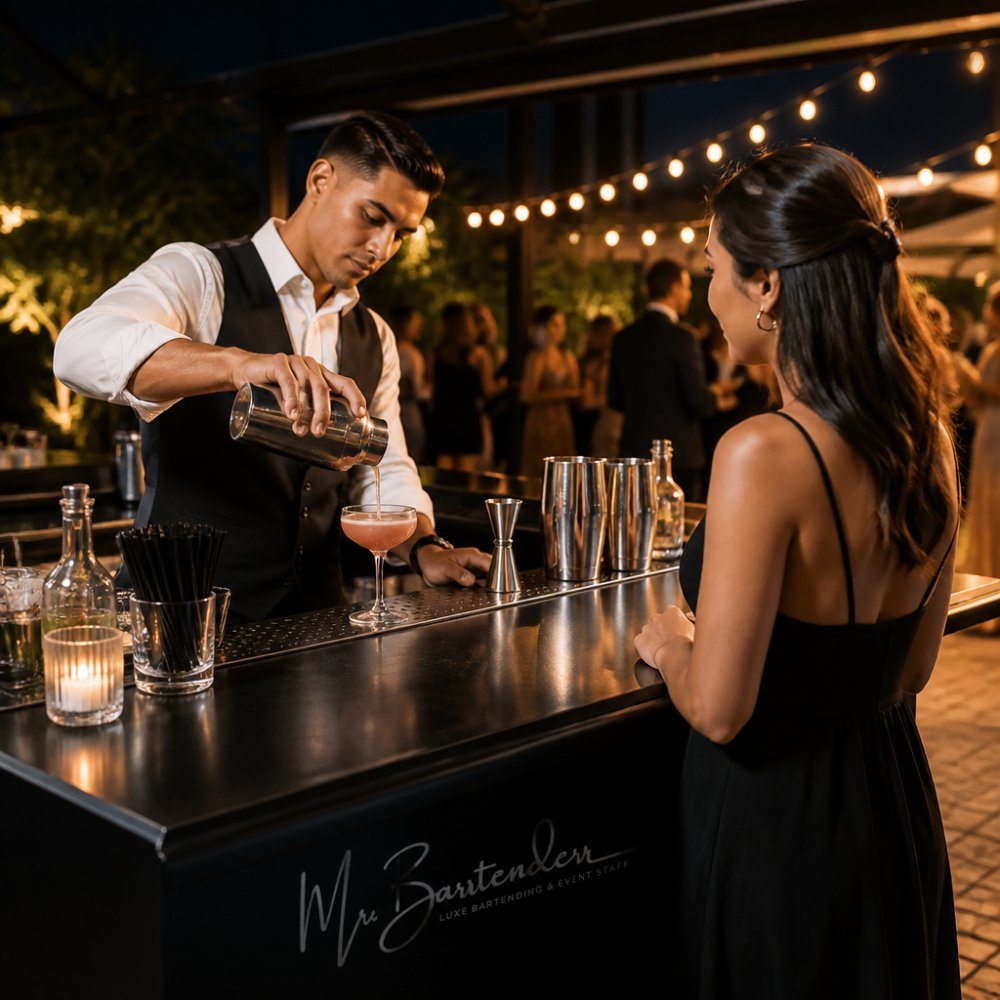
Why Booking a Professional Bartender Changes Your Event
Guests spend less time waiting in line because an experienced bartender works efficiently under pressure, and you avoid the common party-killer of a guest pouring heavy drinks all night. Most importantly, a licensed professional understands the legal responsibilities of serving alcohol, which protects you as the host.
How Many Bartenders for 100 Guests? Staffing Ratios That Work
A reliable rule of thumb is one bartender for every 50 to 75 guests for a standard beer and wine bar. For a full cocktail menu with premium spirits and signature drinks, plan on one bartender for every 40 to 50 guests.
For a 100-guest event, that means you will likely need two bartenders. This ratio accounts for natural peaks in service, such as the toast and the first dance.
Consider these factors when calculating your needs:
- Guest count and drinking pace: A cocktail-heavy crowd needs more staff than a wine-focused reception
- Service window: A four-hour open bar requires more staffing than a two-hour cocktail hour
- Drink menu complexity: Craft cocktails take longer to build than pouring wine or beer
- Bar setup: A single bar station with two bartenders serves faster than two stations with one each
Service Style and Bar Setup Impact Your Staffing Needs
The style of service you choose directly changes your staffing math. A full open bar with a signature cocktail menu demands more bartenders than a limited beer and wine selection.
Full Service Bar Packages Wedding Hosts Should Compare
Full service bar packages for weddings typically bundle the bartender, bar equipment, glassware, and mixers into one package, simplifying planning because one provider handles logistics, delivery, and setup.
A standard package usually covers bartender labor, bar setup, ice, mixers, garnishes, and glassware. A premium package may add a custom bar design, specialty glassware, upgraded mixers, and a dedicated barback.
Bartender Only vs. Bartenders Plus Bar Essentials
The bartender-only option means you provide the bar, alcohol, glassware, and everything else, and the service team shows up to pour. This works well for hosts who already have bar equipment or a venue that provides a bar setup.
The bartenders plus bar essentials option is the more popular choice for weddings and large events. The provider brings the portable bar, glassware, ice, mixers, and garnishes, so you simply supply the alcohol and avoid coordinating multiple rentals.
| Package Element | Bartender Only | Bartenders + Bar Essentials |
|---|---|---|
| Bartender labor | Included | Included |
| Bar equipment | You provide | Provider supplies |
| Glassware | You provide | Provider supplies |
| Mixers and garnishes | You provide | Provider supplies |
| Setup and breakdown | Service only | Full service |
| Best for | Venues with existing bars | Venues without bar infrastructure |
Mobile Bartending Service Requirements: Licensing and Insurance
Mobile bartending service requirements vary by state, but the core expectation is that your bartender holds the proper certification to serve alcohol legally. In Florida and Georgia, servers must complete approved alcohol awareness training.
Liquor liability insurance is the other non-negotiable. This coverage protects you as the host if an incident occurs after alcohol is served. Many venues require proof of insurance before they allow an outside bar service.
What to Verify Before You Sign a Contract
Before you commit to a service, ask for the specific credentials that protect you and your guests.
- Server certification: Confirm each bartender holds current, valid alcohol service certification for your state
- Liquor liability insurance: Request a certificate of insurance naming your event or venue as additionally insured
- Permit handling: Ask whether the provider manages the temporary alcohol permit your venue or city requires
- Background checks: Inquire whether staff undergo background screening as part of the hiring process
What a Professional Bartender Brings Beyond Pouring Drinks
The best professional bartenders are entertainers as much as they are service staff. They engage guests with conversation, tell the story behind a signature cocktail, and create a warm atmosphere at the bar.
The Rise of the 'Sober Curious' Guest and the Mocktail Program
A growing number of guests are 'sober curious,' abstaining for health, religious, or personal reasons. A professional bartender recognizes that the bar is a hospitality station for everyone.
A skilled mixologist designs a dedicated zero-proof program as thoughtful as the cocktail list, crafting complex, layered mocktails.
- Dedicated Mocktail Menu: Instead of an afterthought, a professional will propose 2-3 signature zero-proof drinks that align with your event theme.
- Low-ABV Options: Beyond full-strength cocktails, they can offer 'spritzes' or lower-alcohol by volume (ABV) drinks that allow guests to socialize for hours without over-indulging.
- Designated Driver Recognition: A professional bartender can discreetly ensure designated drivers receive a premium non-alcoholic experience, making them feel valued rather than left out.
Sustainability and Eco-Friendly Bar Practices
Another growing expectation from guests is environmental consciousness. A professional bartender can be your partner in reducing the event's carbon footprint.
- Local and Seasonal Sourcing:
- Waste Management and Reduction:
- Plastic-Free Service:
Interactive Mixology as Entertainment
Beyond the drinks themselves, the modern professional bartender is an entertainer. Ask about interactive mixology experiences that turn the bar into a focal point.
- Hands-On Cocktail Classes: A short, guided session where guests learn to build their own signature cocktail.
- Flair and Performance:
- Custom Infusion Stations:
A professional bartender is no longer just a person who pours drinks; they are a curator of guest experience, a champion of inclusivity, and a steward of sustainability. By incorporating these elements, you are not just hiring a server; you are investing in a feature of your event that guests will talk about long after the last glass is cleared. Contact Mr. Barrtenderr to discuss how our bartenders can craft a modern, inclusive, and memorable beverage experience for your guests.
Pricing Models and Hidden Fees to Ask About
Bartending services typically price their work either by an hourly rate per bartender or a per-person package based on guest count. Hourly rates suit smaller events, while per-person pricing offers predictability for large weddings.
The Standard Fee Categories You Will Encounter
Most reputable providers structure their quotes around these core components.
- Labor: This is the base hourly rate per bartender or the per-person service fee. It covers the bartender's time for setup, service, and breakdown.
- Travel and Logistics: A flat fee or per-mile charge to cover the distance from the provider's base to your venue. This is often non-negotiable but should be clearly stated upfront.
- Equipment and Setup: Charges for the portable bar itself, glassware, ice, mixers, and garnishes. Some packages bundle these; others itemize them.
- Permits and Licenses: The cost of the temporary alcohol permit required by your city or county. A full-service provider typically handles this and passes the government fee through to you.
The Hidden Fee Breakdown Most Hosts Miss
The following line items are where budgets get derailed. A professional service will volunteer this information, but you should still ask for it in writing.
- Service Charge vs. Gratuity: A service charge is a mandatory fee the company keeps to cover overhead. Gratuity is a tip for the bartender. Some contracts include a 15-20% service charge and then still expect a separate gratuity for the staff. Clarify which is which and whether the service charge is distributed to the bartenders.
- Overtime and Overrun Fees: The standard contract is for a set number of hours. If your event runs long, you will be billed at a premium rate, often 1.5x the standard hourly rate, in 30-minute increments. Ask for this rate in writing before the event.
- Barback or Support Staff Fees: For a large guest count or a complex cocktail menu, a provider may recommend a barback to keep the bartender stocked and the bar clean. This is an additional labor line item that is sometimes omitted from initial quotes.
- Specialty Equipment Upcharges: An LED-lit bar, a custom wood bar, or a specialty ice program (like large-format clear ice cubes) will carry a premium. If you want a specific aesthetic, ask for the exact upcharge.
- Cleanup and Breakdown Fees: While most quotes include breakdown, some providers charge extra if the event ends late or if the venue requires a specific, time-consuming breakdown process.
A Transparent Cost Estimation Framework
Instead of asking for a single quote, request an itemized proposal that lists every component. This allows you to see where your money is going and identify areas to trim.
To get an accurate picture, ask these five questions directly:
- What is your hourly overtime rate and in what increments is it billed?
- Is the service charge included in your quoted rate, and does it go to the bartender or the company?
- What is your travel fee for my specific venue address?
- Do you handle the temporary alcohol permit, and is the government fee included in your quote?
- Are there any additional charges for setup, breakdown, or ice that are not listed in your standard package?
A provider that answers these questions clearly and in writing is one that values transparency. This approach not only protects your budget but also builds the trust necessary for a smooth, stress-free event. After you have your itemized quote, you can confidently compare it against other providers and make an informed decision. Contact Mr. Barrtenderr for a detailed, itemized quote that leaves no room for surprise fees.
Choosing the Right Bartending Service for Your Event
Start by confirming the provider serves your area and specializes in your type of event. A company that handles weddings regularly understands the pacing of a reception, while a corporate-focused provider knows how to manage a happy hour.
Ask about their experience with events similar to yours in size and style. Review their licensing and insurance documentation. Look for a provider that offers flexible service levels, from bartender-only to full bar setups.
For hosts in Florida and Georgia, Mr. Barrtenderr brings licensed professionals, customizable service packages, and a track record of 2,000-plus events to the table. Whether you need bartending services for a private party or a full bar setup for a wedding reception, the right team handles the setup, service, and cleanup so you can focus on your guests.
Planning the bar for your event comes down to one decision: do you want someone who pours drinks, or someone who elevates the entire celebration? A professional bartender manages the flow, engages your guests, and handles the legal responsibilities of alcohol service. Mr. Barrtenderr offers licensed, experienced bartenders along with flexible service packages, from bartender-only to full bar setups with custom cocktails and interactive mixology experiences. Contact Mr. Barrtenderr to discuss your event details and receive a customized quote for your next gathering.
Frequently Asked Questions
How many bartenders do I need for a 100-person event?
For 100 guests with a standard open bar, plan on two professional bartenders. This keeps the line moving and gives guests time to interact with the bartender. If you are serving only beer and wine, one bartender can often handle the volume. For a full cocktail menu with signature drinks, consider three bartenders to avoid bottlenecks, especially during peak service times like the first hour of a reception.
What is the difference between a full-service bar package and a bartender-only option?
A bartender-only option provides the licensed professional who serves drinks. A full-service bar package is a more complete solution: it typically includes bar setup, glassware, tools, mixers, garnishes, and sometimes the bar itself. Full-service packages are often the right choice for weddings because they remove the logistics of coordinating rentals and setup from your shoulders. The best choice depends on your venue's existing equipment and your budget.
What should I look for when hiring a mobile bartending service?
Start with licensing and insurance: a reputable service will carry liquor liability coverage and have TABC-certified (or your state's equivalent) bartenders. Ask about their experience with events of your size and whether they provide their own equipment. Review sample drink menus and ask how they customize signature cocktails. Finally, confirm how they handle setup, breakdown, and cleanup so there are no surprises on event day.
How far in advance should I book a bartender for a private event?
For peak wedding season, which runs from spring through fall, book your bartending service six to twelve months out. For smaller private events like milestone birthdays or corporate happy hours, two to three months of lead time is usually sufficient. Booking early also gives you more time to plan a custom drink menu and secure your preferred service package. If your date is flexible, you may find more availability with shorter notice.