

Mobile Mixology Class for Home: 2026 Host Guide
Table of Contents
- What a Mobile Mixology Class for Home Actually Looks Like
- What's Included in an All-Inclusive Package
- How Long Is a Mixology Class and How the Session Flows
- Essential Bar Tools for Home Mixology (What the Pro Brings vs. What You Own)
- How to Book a Private Cocktail Making Class at Home
- DIY vs. Hiring a Mobile Bartending Service: A Straight Comparison
- Safety, Liability, and What Licensed and Insured Really Means
- Conclusion
- Frequently Asked Questions
Last Updated: September 11, 2026
What a Mobile Mixology Class for Home Actually Looks Like
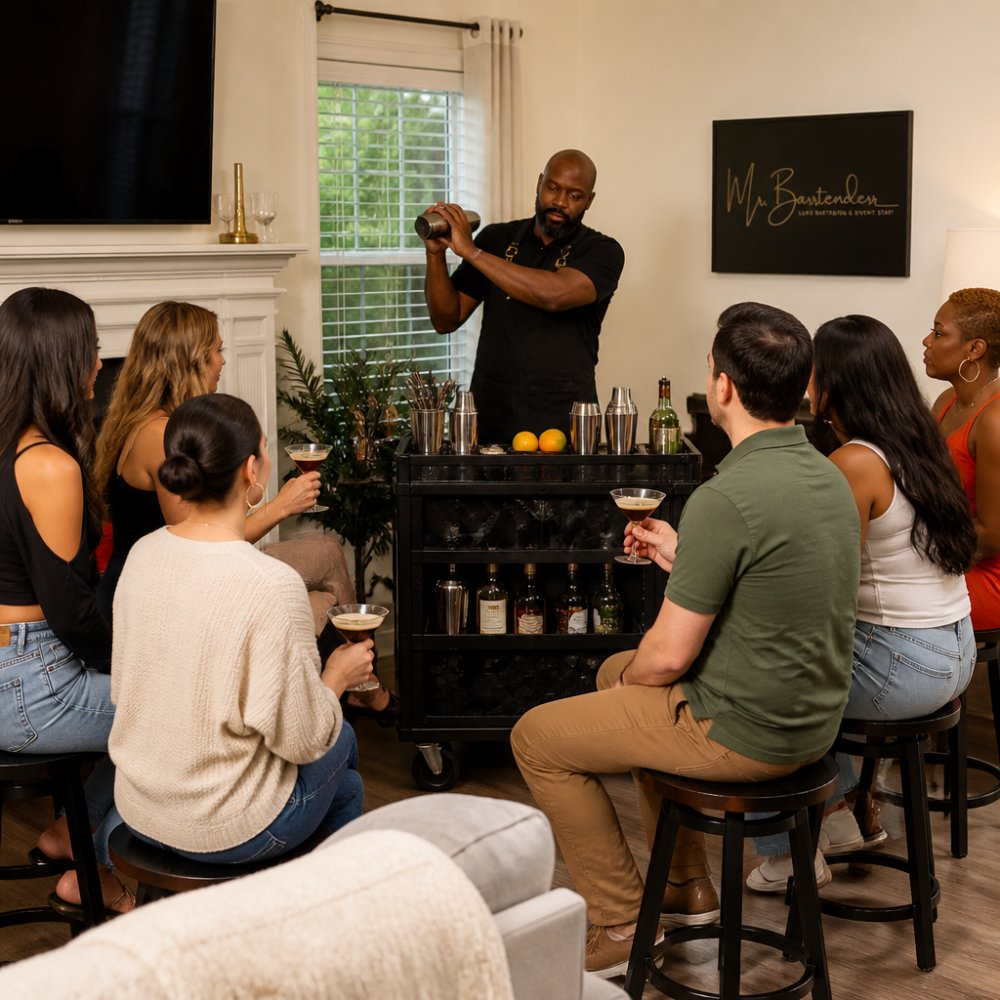
A mobile mixology class for home is a hosted cocktail-making session where a professional bartender arrives at your house with tools, spirits, mixers, and glassware, then teaches your guests to build drinks hands-on. At Mr. Barrtenderr, the format stays consistent: the bar comes to you.
Your instructor sets up a portable station, usually on a kitchen island or a covered patio, and walks guests through two or three cocktails, from shaking and stirring techniques to cocktail garnishes. Everyone gets behind the bar at some point.
What most guides miss is the room logistics. A station needs roughly two meters of clear counter space, a power outlet for LED bar setups, and a path that doesn't cut through the dining table.
What's Included in an All-Inclusive Package
An all-inclusive package covers the full bar operation: a professional mixologist, bar tools and equipment, mixers and spirits, glassware rental, ice delivery, and cleanup. You supply the guest list and the space. The provider handles everything between the front door and the last dirty shaker.
Typical inclusions break down like this:
- Staffing: One or more licensed bartenders, scaled to your guest count
- Bar setup: Portable station, tools, shakers, strainers, jiggers, and glassware
- Ingredients: Spirits, mixers, fresh citrus, syrups, and cocktail garnishes
- Menu design: A customized menu built around your event and preferences
- Service: Setup, drink preparation, guest instruction, and breakdown
What varies is the tier. Some hosts want bartenders only and supply their own alcohol. Others want the full bar service with signature drinks and a dedicated station. Mr. Barrtenderr's full bar service options sit at the top of that range, while a bartenders-only booking works for hosts who already have a stocked bar.
How Long Is a Mixology Class and How the Session Flows
A mixology class typically runs 90 minutes to two hours, with most home sessions landing at the two-hour mark, covering a welcome drink, two guided cocktail builds, and open bar time at the end.
The flow rarely deviates:
- Arrival and setup (30 minutes before guests): station build, ice, glassware, ingredient prep
- Welcome pour (first 15 minutes): a signature drink while guests settle in
- Guided instruction (45-60 minutes): hands-on builds with shaking and stirring techniques
- Open bar and freestyle (final 30 minutes): guests order off the customized menu
- Breakdown (30 minutes after): cleanup, packing, and station removal
Groups under 15 usually finish closer to 90 minutes; larger groups stretch past two hours because instruction time scales with headcount. For a corporate team building event, budget the full two hours and add a buffer.
Essential Bar Tools for Home Mixology (What the Pro Brings vs. What You Own)
The essential bar tools for home mixology are a shaker, a jigger, a strainer, a bar spoon, a muddler, and a sharp paring knife. A professional mobile bartending service brings all of these, so you don't need to buy anything.
Here's the split that matters:
| Tool | Pro Brings | You Already Own |
|---|---|---|
| Boston or cobbler shaker | Yes | Rarely |
| Jigger and measuring tools | Yes | No |
| Hawthorne and fine strainer | Yes | No |
| Bar spoon and muddler | Yes | Sometimes |
| Glassware set | Yes, rental | Partial |
| Ice (block and cubed) | Yes, delivery | Freezer tray only |
| Citrus and fresh garnishes | Yes | No |
The honest answer for most hosts: don't buy a kit. What you should own is a decent ice supply and clean glassware, because those are the two things a pro can't always fix on arrival.
If you want the middle ground, a bartenders plus bar essentials package covers the tools and glassware while you keep your own liquor cabinet in play.
How to Book a Private Cocktail Making Class at Home
Booking a private cocktail making class at home takes four steps: pick a date, confirm your guest count, choose a service tier, and lock the menu. Most providers want two to four weeks of lead time, and weekend dates in wedding season go first. The part most guides skip is what you need ready before the instructor walks in, that preparation separates a smooth class from a rushed one.
The four-step booking sequence:
- Pick a date and time window. Weekend evenings and the weeks around major holidays book out fastest; a weeknight or early-afternoon slot often gets you a more relaxed setup window.
- Confirm your guest count. This drives staffing, glassware, and ice volume. Give the provider a firm number at least 48 hours out, and flag any likely additions.
- Choose a service tier. Decide whether you are supplying the alcohol or the provider is. This single choice changes the quote more than any other variable.
- Lock the menu. Share flavor preferences, dietary restrictions, and non-drinker headcount so the provider can build a customized menu that includes mocktail options.
Host preparation checklist:
- Confirm your final guest count within 48 hours of the event
- Clear roughly two meters of counter or table space for the station
- Identify a power outlet near the setup area
- Decide whether you're supplying alcohol or the provider is
- Share any dietary restrictions, allergies, or non-drinker headcount
- Ask about a mocktail option for guests who don't drink
- Confirm parking or load-in access for the provider's equipment
- Set aside a clear path from the entry to the setup area
Space and setup requirements. A workable station needs about two meters of clear counter or table space, a power outlet within reach for LED bar setups or blenders, and a walking path that doesn't cut through the dining table. Outdoors, confirm the provider can work on a covered patio or bring a canopy, sun and wind make shaking and garnishing harder. Indoors, a kitchen island or a dining table pushed against a wall both work.
Glassware and ice prep. Most all-inclusive packages bring glassware and ice, but a bartenders-only tier means you supply both. Plan on roughly two to three glasses per guest, plus a water glass station. For ice, plan on more than you think: shaking a single cocktail can use a full cup of cubed ice, and block ice for stirred drinks melts more slowly. If you supply your own, bag ice the day before and store it in a cooler, not just the freezer.
Timeline and lead time. Two to four weeks is the standard booking window, stretching to four to six weeks during wedding season and the December holidays. If your date is firm and popular, book as soon as you have a guest count range, then confirm the final number closer to the event.
That last point matters more than most hosts expect. A non-alcoholic mocktail bar keeps the whole room included, and wellness mocktails have moved from afterthought to requested feature at milestone celebrations. When you are ready to lock your date, book a private session and let the provider handle the setup, instruction, and cleanup while you enjoy your own party.
DIY vs. Hiring a Mobile Bartending Service: A Straight Comparison
Hiring a mobile bartending service wins on execution; DIY wins on control. The right choice depends on your guest count, your budget flexibility, and how much of the evening you want to spend working instead of hosting. The real trade-off is time, consistency, and liability.
| Factor | DIY Home Class | Professional Hire |
|---|---|---|
| Your time investment | 6-10 hours planning and shopping | 1-2 hours coordination |
| Tool and glassware cost | Out of pocket | Included |
| Menu consistency | Varies by your skill | Standardized recipes |
| Cleanup | Yours | Handled |
| Licensing and insurance | Your responsibility | Provider carries it |
| Scalability past 20 guests | Difficult | Designed for it |
| Best for | Small, casual gatherings | Weddings, corporate, milestones |
When DIY actually works. The DIY route works for six to ten close friends and a relaxed vibe. Buy a starter kit, print a few recipes, and let guests build their own drinks. The math holds as long as you keep the menu to two or three cocktails and accept spending part of the evening restocking ice and washing glassware.
When the math shifts. Past 20 guests, the math shifts fast. You are managing ice, restocking mixers, and washing glassware while your own party happens around you, and hosts commonly underestimate ice and glassware by half. At that point, the professional hire pays for itself in the hours you do not spend behind the bar.
The liability angle. If you are serving alcohol at a private event, the host can carry responsibility for what happens afterward; a certified and insured provider absorbs that exposure. That is why corporate event planners will not touch a DIY bar for a client-facing function. Before you book any provider, ask three questions:
- Can you show proof of general liability insurance?
- Are your bartenders trained in responsible service and intervention?
- Who holds responsibility if a guest leaves impaired?
A professional operation answers all three without hesitation; a provider who deflects on insurance is one you should not hire, regardless of price. Request the certificate of insurance before the event, not the day of.
A middle path. If you want the tools and glassware handled but prefer to keep your own liquor cabinet in play, a bartenders plus bar essentials package covers the equipment while you supply the spirits. That hybrid often works well for hosts who already have a stocked bar and a specific guest list in mind.
Ready to skip the shopping list and the cleanup? book a mobile mixology experience and let a licensed team bring the bar, the tools, and the instruction to your home.
Safety, Liability, and What Licensed and Insured Really Means
Licensed and insured means the provider holds the required business licenses for on-site alcohol service and carries liability coverage for the event, for a private host, the difference between a fun evening and personal financial exposure.
Ask any provider three questions before you book:
- Can you show proof of general liability insurance?
- Are your bartenders trained in responsible service and intervention?
- Who holds responsibility if a guest leaves impaired?
A professional operation answers all three without hesitation; a provider who deflects on insurance is one you shouldn't hire, regardless of price.
Two more practical safety points. First, food matters: a bar with no food service leads to faster intoxication, so pair the class with catering or at least heavy appetizers. Second, plan transportation before the event starts, advance rideshare arrangements prevent the worst-case scenario.
Conclusion
Hosting a cocktail class at home comes down to one decision: do you want to run the bar or enjoy your own party? Mr. Barrtenderr builds the answer around your event, with licensed staff, a customized menu, and full setup and cleanup handled for you. Our mobile mixology experience brings hands-on instruction, signature drinks, and a bar setup that fits your space, whether it's a backyard anniversary or a 200-person corporate happy hour. Get started with Mr. Barrtenderr and raise a glass without lifting a shaker.
Frequently Asked Questions
What should I expect from a mobile mixology class at home?
Expect a professional mixologist to arrive with spirits, mixers, fresh garnishes, bar tools, and glassware for a hands-on session. Guests typically rotate through two to three cocktail recipes, learning shaking and stirring techniques, then enjoy the drinks they make. A mobile mixology class for home usually runs 90 minutes to two hours and ends with a signature drink tailored to your group. Setup and cleanup are handled by the provider, so the host's only job is inviting guests.
How long is a mixology class, and can it fit a corporate happy hour?
Most sessions run 90 minutes to two hours, and providers can compress the format to 60 minutes for corporate team building or extend it to three hours for larger celebrations. A 200-person corporate happy hour usually needs a different structure than an intimate class, often a mix of guided instruction and full mobile bartending service. Share your headcount and timeline when you request a quote so the provider can match the format to your event.
Do mobile mixology services provide all the necessary glassware and ingredients?
Reputable providers bring spirits, mixers, fresh citrus, syrups, garnishes, ice, bar tools, and glassware. Confirm what is included when you book, because some packages cover bartenders only while others are all-inclusive. If your event includes wellness mocktails or non-alcoholic preferences, ask whether the menu can include zero-proof options. Mr. Barrtenderr offers tiered service levels, from bartenders-only to full bar setups, so you can choose how much equipment the team supplies.
Is a mobile mixology class worth it compared to a DIY cocktail night?
DIY nights often involve buying spirits, mixers, garnishes, ice, and disposable glassware, and someone still has to bartend and clean up. A professional mixologist brings tested recipes, portion control, and the equipment that makes drinks consistent. You also get liability coverage when the provider is licensed and insured, which matters if guests are drinking at your home. For milestone celebrations, a guided experience can offer better drinks and less stress for the host.